


Preview
What it is.
Shared trackers die when someone gets left out over a seat count. On Airtable's free plan all users are free, so the whole team edits the same records.
Records link to each other, so a campaign row can point at its assets, its owner and its results. A spreadsheet makes you copy that information around; here it stays in one place.
What you get.
- Free editing for everyone, since the free plan charges nothing per user.
- Linked records, views, plus filters, so each person sees only their own rows.
- Forms that write into the table, which stops briefs arriving in chat.
- Interfaces, so a stakeholder gets a clean view instead of the raw grid.
How to set it up.
Start from a template close to your use case and delete the fields you don't need.
Link records between tables early, because retrofitting links later means re-entering data.
Build a form for anything a colleague submits, so briefs stop arriving in chat.
Create a filtered view per person, so nobody scrolls a table looking for their rows.
Watch the record count as it grows, since the free plan is built for lightweight use.
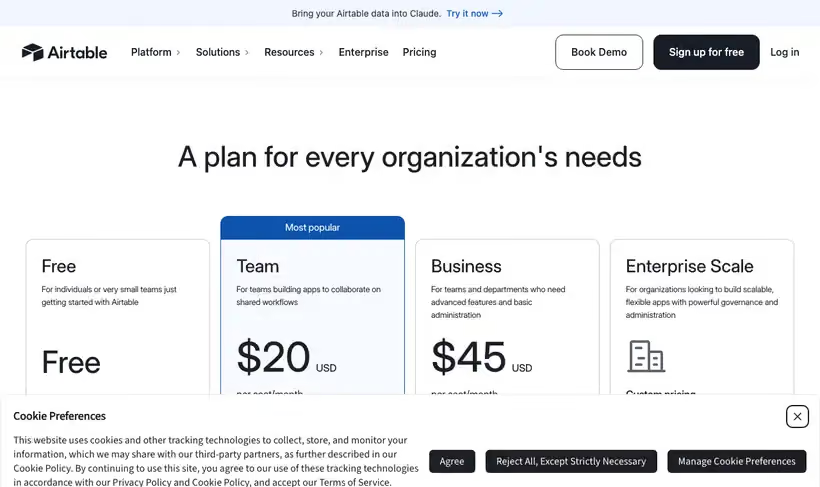
Pricing Plans
Free
$0
all users free, built for individuals and small teams
Use cases
Calendar the whole team edits
Invite everyone, since the free plan charges nothing per person.
One base, several views
Give each person a filtered view so nobody scrolls past rows that are not theirs.
Intake that lands in the base
Point a form at the table so requests arrive as rows instead of messages.
Best for
A content calendar the team edits
Free users means nobody gets left out because of a seat count, which is usually what kills shared planning tools.
Campaign tracking
Link a campaign to its assets and its owner and the status meeting gets shorter.
Intake forms
A brief submitted through a form lands as a row with the fields you asked for, not as a paragraph in a chat thread.
Open the tool
Opens on Google in a new tab.