


Preview
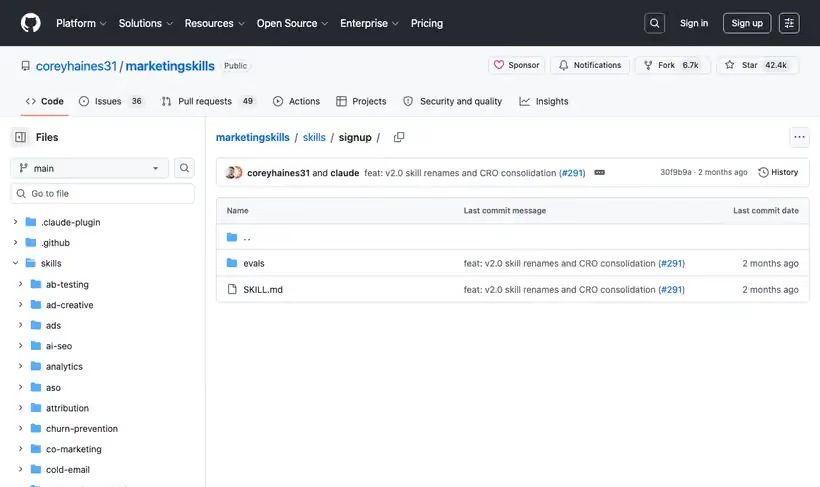
What it is.
You tell it the flow type, how many steps and required fields you have, the completion rate and the step where people leave. It returns a shorter flow aimed at that drop-off point.
The exercise producing most of the gain is justifying every required field or deleting it, and it needs no engineering to decide. Free trials, freemium accounts, paid signups and waitlists each carry a different friction budget.
What you get.
- A step and field count against the current completion rate
- The drop-off point named, with recommendations aimed at it
- Guidance by flow type, from free trial through waitlist
- Field-by-field justification, so required fields have to earn the place
- A B2B and B2C split, since tolerance for friction differs
How to set it up.
Install with npx skills add coreyhaines31/marketingskills --skill signup -a claude-code.
Name the flow type first: free trial, freemium, paid account or waitlist. It changes what counts as acceptable friction.
Count your screens and your required fields, including the fields added for a sales team that never opens them.
Bring the completion rate and the step where people leave. Recommendations key off the drop-off point.
Justify every required field or delete it. This is the exercise that produces most of the gain.
Say whether you are B2B or B2C, because a work email requirement is normal in one and a wall in the other.
Pricing Plans
Free. MIT license.
Checked against the repo in July 2026.
Use cases
Trial flow losing people midway
Hand it the flow type, the screen count, the required fields and the step where people leave. It returns a shorter flow aimed at that exact step instead of general advice about friction.
Field justification pass
The form carries fields a sales team asked for years ago and never opens. List every required field and it makes each one earn its place or get deleted, which needs no engineering to decide.
Waitlist before launch
You're opening a waitlist next month. Name the flow type and it applies the waitlist friction budget, which differs from what a paid signup can carry.
The work-email question
You're debating whether to require a work email. Say whether you sell to companies or consumers and the recommendation changes, because the same field is normal in one market and a wall in the other.
Best for
A signup form with too many fields
The justify-or-delete pass is the highest-return work available, and it needs no engineering to decide.
Trial signups that stall halfway
Recommendations aim at the named drop-off step instead of improving the whole flow.
Deciding between trial and freemium friction
The flow types are treated separately, with different friction budgets.