


Preview
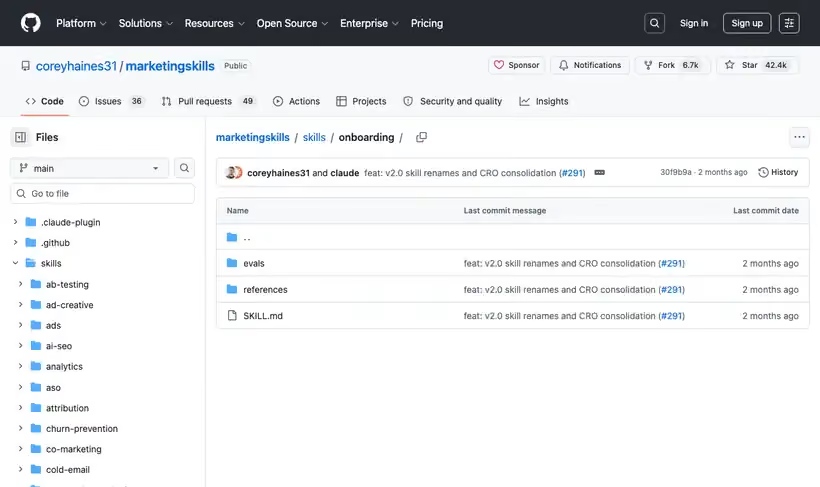
What it is.
It makes you define activation as one named action, then walks your current post-signup flow screen by screen against where users drop, and returns a shorter path to that action.
Four principles shape the output: remove every step between signup and core value, one goal per first session, make the user do the thing and not read about it, then show progress. Empty states change the most.
What you get.
- A single named activation action, agreed before anything gets redesigned
- A step-by-step read on the current post-signup flow and where it leaks
- Empty-state and checklist recommendations tied to the activation action
- A first-session scope, so advanced features get deferred to a later session
- A time-to-value reduction list, ordered by what removes the most friction
How to set it up.
Install with npx skills add coreyhaines31/marketingskills --skill onboarding -a claude-code.
Run product-marketing first so the skill has your product and audience context on file.
Define the aha moment as one action a user takes, not as a feeling or a page view.
Walk it through the current flow screen by screen, and say where users stop. Drop-off location is the input the recommendations key off.
Cut to one goal for the first session. Anything that fails to lead toward the activation action gets deferred to a later session.
Replace tutorials with the action itself wherever you can. Doing beats learning about is a stated rule, and it changes empty states most of all.
Pricing Plans
Free. MIT license.
Checked against the repo in July 2026.
Use cases
Pinning down the aha moment
The team can't agree on what activation means. Bring the candidate definitions and it forces the choice to one action a user takes, and everything after gets designed backwards from it.
Walking a leaking flow
Signups stall somewhere after the welcome screen. Walk it through the flow screen by screen with your drop-off data, and it returns a shorter path keyed to where people stop.
Empty states that start work
Your empty states are pictures of a finished workspace. Hand them over and each one comes back as a first action the user performs, following the doing-beats-reading rule.
Defending a short first session
A stakeholder wants four features in the product tour. The one-goal-per-session rule gives you a stated reason to defer them, with the deferred items assigned to later sessions.
Best for
Signups that never become users
This is the exact case the skill is scoped to, and it separates the signup problem from the activation problem.
Rebuilding empty states
The do-not-show principle turns an empty state into a first action instead of a screenshot of what the product could look like.
Deciding what to cut from the first session
One goal per session gives you a stated reason to defer three features a stakeholder wants in the tour.