


Preview
What it is.
You describe how your sales team is set up and it scores the process 0 to 10 against Aaron Ross's five diagnostic rows, then names the rows blocking your next point. Once the process is set, our sales workflow automation guide covers the templates that run it.
It sorts your leads into seeds from referrals, nets from marketing and spears from outbound prospecting, with conversion and cost on each, and works the pipeline math backwards from a revenue target. The pattern it expects to find is over-investment in nets and under-investment in spears.
What you get.
- A 0 to 10 score with the specific diagnostic rows blocking the next point
- The three lead types with conversion rate and cost attached to each
- Role definitions for prospecting, closing and account management
- The referral-email method and ANUM qualification
- Pipeline math, so a revenue target turns into a required activity number
How to set it up.
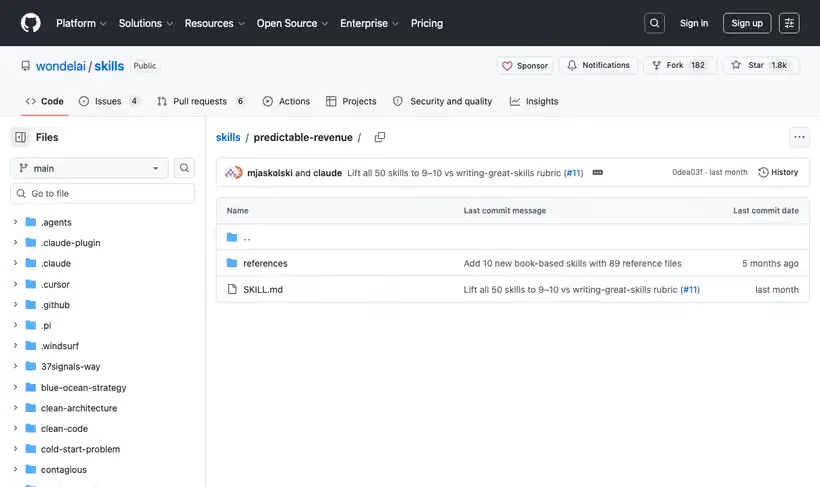
Install with npx skills add wondelai/skills/predictable-revenue --global, or add the marketplace and install the sales-influence plugin.
Describe your current setup, including who prospects and who closes. Row one is the separation question and it is the most common failure.
Ask for the score first. It arrives with the rows you failed, which is the shortest path to knowing what to change.
Name your lead mix in the seeds, nets and spears frame, then compare it against your spend split.
Work the pipeline math backwards from the revenue number, so the activity target is derived instead of guessed.
Standardize the handoff from prospecting to closing before you hire more of either. That row gates the score twice over.
Pricing Plans
Free. MIT license.
Checked against the repo in July 2026.
Use cases
Scoring a founder-led setup
The founder still prospects and closes every deal. Describe the setup and the diagnostic returns a score out of ten with the failing rows named, starting with role separation.
Sizing the first hire
You're choosing between an SDR and another closer. Sort your leads into the seeds, nets and spears frame with conversion and cost on each, and the mix shows whether outbound or inbound conversion is the gap.
Backing into activity targets
The board set a revenue number and nobody knows what it implies weekly. The pipeline math works backwards from the target, so the required activity level is derived, never guessed.
Best for
One person prospecting and closing
The framework's first diagnostic is exactly this, and the score tells a founder how much of their pipeline depends on their own effort.
Planning the first SDR hire
The seeds, nets and spears split shows whether outbound is the gap or whether inbound conversion is.
Getting pipeline predictable enough to forecast
Three-month predictability is one of the five scored rows, so it is treated as an outcome of process instead of of effort.