


Preview
What it is.
You describe your product and your competitors, and it fills April Dunford's positioning canvas: which alternatives buyers weigh you against, what only you have, what value that delivers, who cares most about it, and the market category following from those four.
Then it scores the result 0 to 10 and names the band. A 5 or 6 means your own team describes the product differently to each other, which is a problem you can act on this week.
What you get.
- A completed positioning canvas across all five components
- A score from 0 to 10 with the band description and the gap to the top
- A list of the alternatives buyers weigh you against, including doing nothing
- A market category choice with the argument for it written down
- A team workshop structure for getting everyone describing the product the same way
How to set it up.
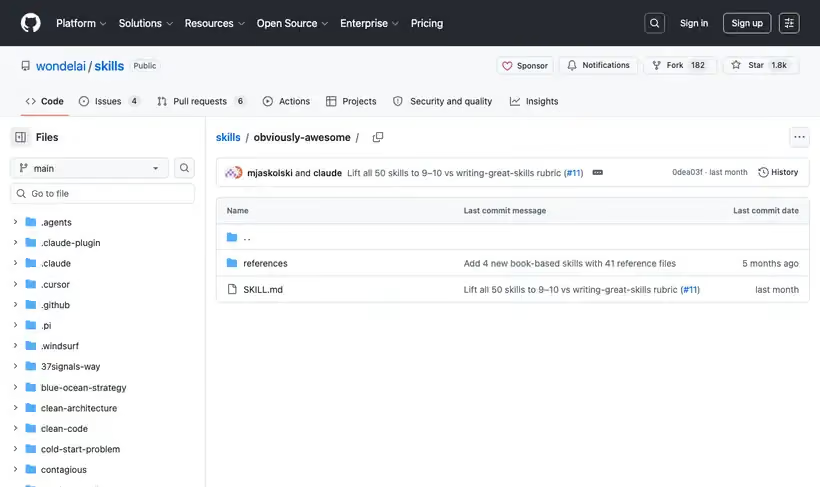
Install with npx skills add wondelai/skills/obviously-awesome --global, or take the strategy-growth plugin from the same marketplace.
List the alternatives your buyers weigh, including spreadsheets and doing nothing. Skipping this step is why most positioning work stalls.
Name attributes only you have. An attribute two competitors also have belongs in table stakes, not in your positioning.
Translate each attribute into the value it delivers, because buyers weigh value and ignore features.
Pick the customers who care most about that value, then describe them by situation instead of by job title.
Choose the market category last. It follows from the other four components, and choosing it first is what produces a category nobody searches for.
Pricing Plans
Free. MIT license.
Checked against the repo in July 2026.
Use cases
Diagnosing prospect confusion
Demos keep opening with prospects guessing wrong about what you do. Describe the product and the competitors you see; it fills the canvas and usually points at a category choice that sets the wrong comparison.
Scoring team alignment
Two founders describe the product two ways. Run the canvas and take the score with its blocking components, hold the workshop it structures for you, then rerun it to see whether the score moved.
Picking a category deliberately
You're entering a market with named incumbents. List the alternatives your buyers weigh, including doing nothing; the category choice falls out of the other four components, with the argument for it written down.
Best for
Prospects who do not understand what you do
This is the diagnostic the skill is built for, and the usual culprit is a category choice that sets the wrong comparison.
Entering a crowded market
Mapping alternatives first tells you which comparison you are walking into before you write a single line of copy.
Two people describing the product two ways
The team workshop and the 5 to 6 band exist precisely for this, and the score gives you something to move.