


Preview
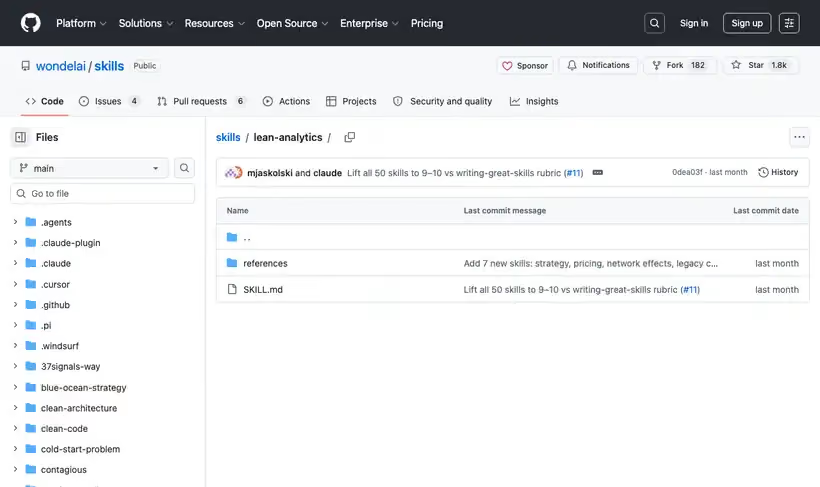
What it is.
You show it your dashboard and it audits every number against Croll and Yoskovitz's four-part test, then picks one primary metric matched to your business model and your stage.
It also asks for a paired counter-metric and a target with the response to missing it agreed in advance. Growing totals, cumulative charts and blended averages fail the test by definition, so most dashboards come out shorter.
What you get.
- One primary metric matched to your business model and stage
- A paired counter-metric, so the primary one cannot be gamed
- A target with a pre-agreed response for missing it
- A vanity metric cut list, including cumulative charts and blended averages
- A score out of 10 with the specific changes to reach the top band
How to set it up.
Install with npx skills add wondelai/skills/lean-analytics --global, or take the product-strategy plugin.
Name your business model and your stage. The right primary metric differs across both, and skipping this is a scored failure.
Run every number on your dashboard through the four-part test. Growing totals and cumulative charts fail it by definition.
Pick one primary metric, then add a counter-metric that would catch you gaming it.
Set the target as a line in the sand and agree now what happens if you miss it. Deciding afterwards is how targets get quietly moved.
Split the data by group and not reporting a blended average, since a blended number hides the change you need.
Pricing Plans
Free. MIT license.
Checked against the repo in July 2026.
Use cases
Shrinking a crowded dashboard
The weekly dashboard has a dozen so-called key metrics. Show it the board and every number runs through the four-part test, with growing totals and cumulative charts failing by definition.
Picking the one metric
Name your business model and your stage, and it matches a primary metric to both, then pairs it with a counter-metric that would catch you gaming it.
A target with teeth
Targets at your company drift when missed. Set the line in the sand through the skill and the response to missing it gets agreed in advance, before the quarter starts.
Pre-board-deck check
The investor update is due. Run the deck's numbers through and the investor-flattering ones get named as bottom-band metrics before a partner does it for you.
Best for
A dashboard with a dozen key metrics
The four-part test deletes most of them, and the ones surviving are the ones that change a decision.
Setting a company target
A line in the sand with a pre-agreed miss response is what stops a target drifting through the quarter.
Reporting to investors
The skill names investor-flattering numbers as the bottom band, which is a useful check before a board deck.