


Preview
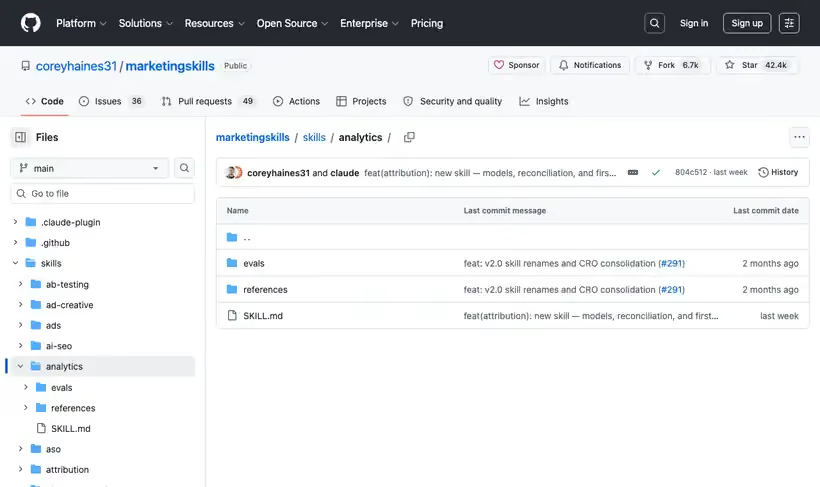
What it is.
You bring the decisions you need to make this quarter and it works backwards to a tracking plan: the events, the naming scheme, the UTM structure and a validation pass to run before you trust a chart.
Every event has to name the decision it informs, which keeps the plan short. Agreeing the naming scheme before implementation is the step teams regret skipping, because renaming events after six months of data is the expensive version of that conversation.
What you get.
- A tracking plan where each event names the decision it serves
- An event naming scheme, agreed before implementation
- UTM structure and conversion tracking setup
- A validation pass, so you find out whether events are firing before you trust a chart
- A vanity metric cut list, since quality of events beats quantity
How to set it up.
Install with npx skills add coreyhaines31/marketingskills --skill analytics -a claude-code.
Write down the decisions you need to make this quarter. Every event in the plan gets tied to one of them or it does not go in.
Say what tracking already exists and in which tools, because the plan is a diff against your current state.
State privacy and compliance constraints early. They change what you can record, not how you record it.
Agree the naming scheme and write it down. This is the step that decides whether the data is usable in a year.
Validate the implementation before you build a single dashboard. An unfired event and a zero look identical.
Pricing Plans
Free. MIT license.
Checked against the repo in July 2026.
Use cases
Tracking plan for a relaunch
A new site goes live next quarter. Write down the decisions you'll need to make and hand them over, and the plan comes back with each event named for the decision it informs.
The naming scheme meeting
Two teams are about to implement events their own way. Agree the scheme through the skill before anyone writes code, because a rename after months of collected data costs far more than the meeting does.
Auditing inherited events
You've taken over a property with dozens of events and no documentation. The validation pass shows which ones fire at all, and the vanity cut list says which of the survivors deserve to stay.
Validating before the dashboard
Charts are about to get built on fresh tracking. Run the validation pass first, since an event that never fired and a true zero look identical on a chart.
Best for
Setting up tracking on a new site
You get a plan tied to decisions and a naming scheme, which is the part that is hard to retrofit.
Auditing tracking you inherited
The validation and vanity metric passes tell you which of the existing events are worth keeping.
Cleaning a dashboard nobody reads
If a number will not change what you do, the skill's own rule is to stop measuring it.