


Preview
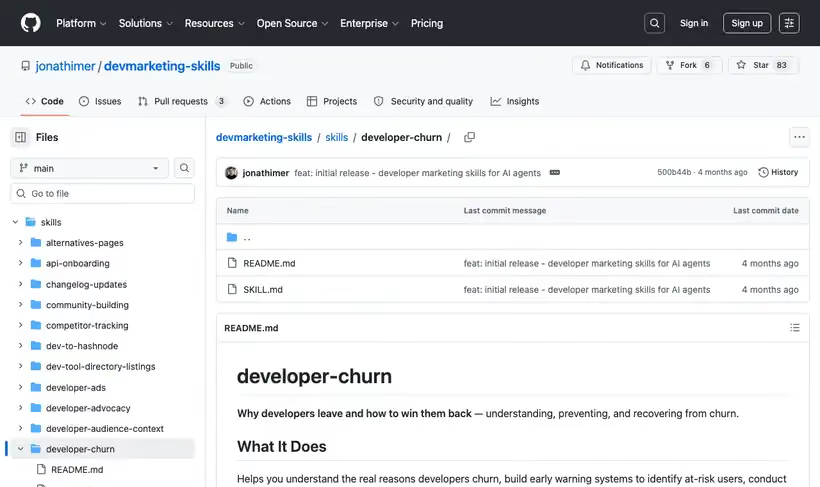
What it is.
You bring churn by segment, the accounts lost in the last 30 to 90 days, their support tickets and their usage before they went. It builds at-risk detection and a win-back approach out of that.
The tone rule is stated up front: no guilt trips and no desperate discounts, because a developer who left over a missing feature reads a discount email as confirmation. Support ticket history is the evidence most churn analysis leaves out.
What you get.
- At-risk identification from usage patterns before the cancel
- A win-back approach that leads with what changed in the product
- Churn read by segment instead of one blended rate
- Support ticket history used as churn evidence
- Competitor switching treated as its own case
How to set it up.
Install with npx add-skill jonathimer/devmarketing-skills.
Load the developer-audience-context file first, since alternatives and pain points drive the whole analysis.
Pull churn by segment. One blended number across hobbyists and enterprise accounts hides both stories.
Add support ticket history for the accounts you lost in the last 30 to 90 days. This is the evidence most churn analysis omits.
Compare usage patterns before the cancel against your retained accounts, which is what makes at-risk detection possible.
Write win-back messages around what changed in the product. A discount to a developer who left over a missing feature confirms their decision.
Pricing Plans
Free. MIT license.
Checked against the repo in July 2026.
Use cases
Early warning on quiet accounts
Developer accounts go dark before they cancel. Hand it usage patterns from retained and lost accounts, and it builds at-risk detection out of the difference between the two.
Win-back after closing a gap
You lost accounts over something you've since built. Bring the lost accounts with their support tickets, and it writes win-back messages that lead with the product change and skip the discount a developer would read as confirmation.
Segmenting a blended rate
One churn number covers hobbyists and enterprise accounts. Pull churn by segment through the skill and the two stories separate, each with its own at-risk signals.
Answering competitor switching
Some cancellations name a rival on the way out. It treats those as their own case with a stated cause you can respond to, apart from accounts that simply stopped needing you.
Best for
A developer tool losing accounts quietly
Usage patterns before the cancel are the signal, and this treats at-risk detection as the primary job.
Win-back campaigns that got ignored
The tone rule is usually why. Discounts read badly to a technical buyer who left for a technical reason.
Churn you have never segmented
A blended rate across hobbyist and enterprise accounts hides two different problems.