


Preview
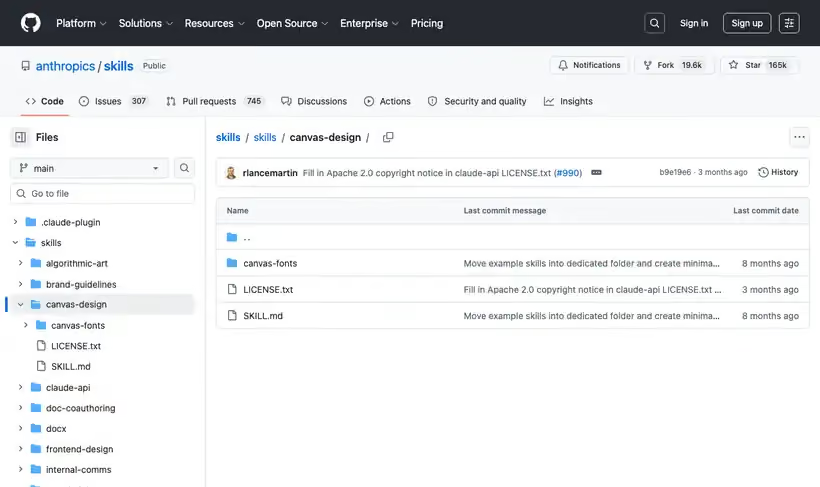
What it is.
You describe the piece and it writes a design philosophy as a markdown file first, then expresses that philosophy on a canvas as a PNG or a PDF.
Keeping the philosophy file lets you reuse one aesthetic across a campaign, so six concepts hold together instead of reading as six templates. Output stays narrow at markdown, PDF and PNG, which is why the print quality holds up.
It carries an explicit instruction to create original work and never copy an existing artist, which matters when the output enters paid distribution.
What you get.
- A written design philosophy you can reuse across a campaign
- PNG and PDF output, which covers static ads and print handouts
- A consistent look across several pieces, because the philosophy file is the constant
- An original-work constraint stated in the skill itself
How to set it up.
Add the marketplace with /plugin marketplace add anthropics/skills, then /plugin install example-skills@anthropic-agent-skills.
Describe the piece and the feeling you want. The skill treats your input as a foundation and not a specification, so a tight brief and a loose one produce different work.
Read the philosophy file before you let it render. This is the cheap place to redirect the whole piece.
Ask for PNG when the destination is an ad platform, and PDF when it is going to print.
Reuse the same philosophy file for the rest of the campaign, so the set holds together.
Pair it with theme-factory when the piece has to sit inside an existing brand palette.
Pricing Plans
Free. Apache 2.0 license.
Included in Anthropic's example-skills plugin. Checked against the repo in July 2026.
Use cases
A campaign set that matches
You need several static concepts that read as one campaign. Have it write the design philosophy once, then render each piece against the same file, and the set holds together across formats.
Print collateral for a booth
The conference handout needs print quality that a deck tool mangles. Describe the piece and the feeling you want, ask for PDF, and the output survives the printer.
Redirecting before render
You know the brief is loose. Read the philosophy markdown before it renders and redirect the whole piece at the cheap stage, in writing, before any revision rounds.
Briefing a designer
A designer joins the project next week and mood boards keep getting misread. Hand over the written aesthetic position plus one rendered example, which is a tighter brief than a board of screenshots.
Best for
A static ad set that needs to look deliberate
The philosophy step is what stops six concepts from looking like six unrelated templates.
One-page handouts and conference collateral
PDF output at print quality covers the formats a deck tool handles badly.
Concepting before a designer gets involved
A written aesthetic position plus a rendered example is a better brief than a mood board.