


Preview
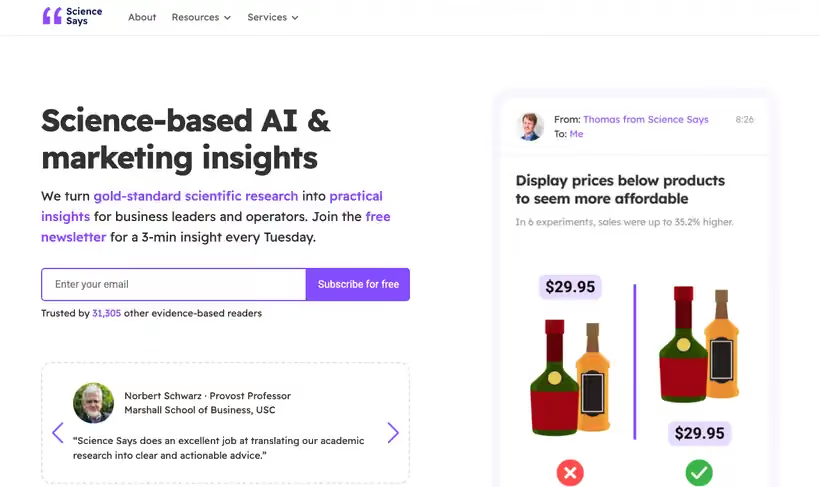
What it is.
Thomas McKinlay started the newsletter after more than ten years at Google and in startups. It ran under the name Ariyh before becoming Science Says. Stefano Puntoni, a Wharton marketing professor, serves as chief academic advisor.
Editions run about three minutes and cover one paper, usually published in the last month or two. The number sits up front, and the instruction follows. The team puts the useful share of the papers it screens at one to two percent.
A paid platform holds more than 300 insights, filterable by topic. Playbooks and enterprise work sit alongside it.
What you get.
- A three-minute insight every Tuesday, based on one peer-reviewed paper
- The effect size up front, with the journal and publication date named
- A short instruction on how to apply the finding at work
- Case-study editions that walk through a design decision, such as a referral program
- Papers picked mostly from the past one to two months
Editions we'd start with.
"Made with AI" gets lower engagement ↗
Journal of Consumer Research, May 2026. Posts labeled as AI-generated took 7 to 8 percent fewer likes.
When and how to call customers by name ↗
Using a name lifts spend by up to 17 percent, with guidance on doing it without sounding scripted.