


Preview
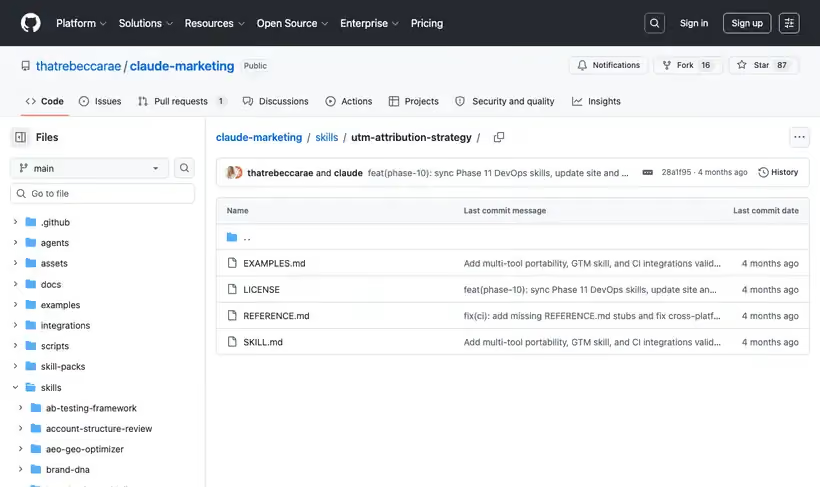
What it is.
It documents all five UTM parameters with which of them are required, then builds a naming scheme across your channels and connects the tagging forward to an attribution model.
Source and medium are where inconsistency does the most damage, so those get settled first. Retagging applies going forward, which means picking a cutover date and knowing which history stays comparable.
What you get.
- A reference for all five UTM parameters, with which ones are required
- A consistent naming scheme you can hand to anyone launching a campaign
- Attribution model configuration built on top of the tagging
- Cross-channel performance measurement
- A route from marketing spend through to revenue
How to set it up.
Clone the repo and copy skills/utm-attribution-strategy into ~/.claude/skills.
List every channel and campaign type you run before writing any convention, since the scheme has to cover all of them.
Settle source and medium first. Both are required, and inconsistency there does the most damage.
Write the naming scheme as lowercase with a single separator, then document it where the people launching campaigns will see it.
Audit your existing tags against the new scheme before applying it, so you know which historical data is comparable.
Connect the tagging to your attribution model deliberately, and read the attribution skill for what each model assumes.
Pricing Plans
Free. MIT license.
Checked against the repo in July 2026.
Use cases
Conventions before the first dollar
A paid program launches next month. List every channel and campaign type you'll run, and the naming scheme comes back as a lowercase convention with a single separator, documented where campaign launchers will see it.
One channel, three names
The channel report shows the same source spelled several ways. Run your existing tags through the new scheme to see what matches, and you pick a cutover date knowing which history stays comparable.
From tags to a model
Tagging is clean and attribution still isn't set up. The skill connects the naming scheme forward to an attribution model, with what each model assumes made explicit.
The quarterly tag audit
New channels arrive tagged by whoever launched them. Re-run the audit each quarter and the drift gets caught while the affected data is still small.
Best for
Reports where one channel appears three ways
Inconsistent source and medium values are the cause, and a documented scheme is the only durable answer.
Before launching a paid program
Tagging conventions set once at the start cost an hour, and retrofitting them costs a quarter of data.
Connecting spend to revenue
The skill runs from parameters through to attribution modeling, which is where tagging pays off.