


Preview
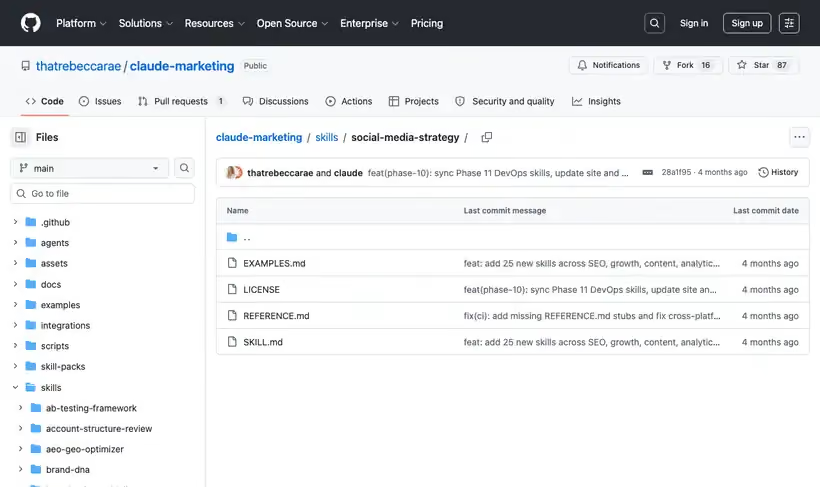
What it is.
It hands you a platform matrix with an audience, a content style, a posting frequency and one key metric per channel, then builds a calendar against the frequency you can hold.
You use it to decide which channels to drop. LinkedIn is listed at 3 to 5 posts a week measured on engagement rate and X at 1 to 3 a day on impressions and replies, so the resourcing cost is visible before you commit.
What you get.
- A platform matrix with frequency and key metric per channel
- Content style guidance matched to each platform's audience
- A content calendar structure you can staff against
- Engagement and community management tactics per channel
- Performance measurement keyed to the metric that platform rewards
How to set it up.
Clone the repo and copy skills/social-media-strategy into ~/.claude/skills.
Pick channels from the matrix by frequency you can sustain, not by audience size. Posting to LinkedIn 3 to 5 times a week is a commitment someone has to keep.
Take the key metric for each channel as the only one you report. Impressions on LinkedIn and engagement rate on X both measure the wrong thing.
Match content style to platform. Thought leadership and case studies for LinkedIn, commentary and threads for X, video for TikTok and YouTube.
Build the calendar against the stated frequency, then cut a channel instead of under-post it.
Use the engagement tactics for the channel you picked, since community management differs by platform.
Pricing Plans
Free. MIT license.
Checked against the repo in July 2026.
Use cases
Dropping half the channels
The team posts everywhere and sustains nothing. Hand it the channels you run; the frequency column makes the resourcing cost of each explicit, which is usually the argument for cutting.
Cleaning up the report
The monthly social report mixes impressions with saves. Take the one stated metric per channel; the next report tracks what each platform rewards and nothing else.
First month somewhere new
The team has never run this platform before. Pull its row from the matrix; the row hands you the audience, the content style, the frequency, and the metric, which covers most of what you need before the first post.
A calendar you can staff
Ambition outruns staffing every quarter. Build the calendar against a frequency someone can hold; where a channel doesn't fit, the guidance is to cut it, never to under-post it.
Best for
Choosing which channels to drop
The frequency column makes the resourcing cost explicit, which is usually the argument for cutting two of four.
Reporting social without vanity numbers
One key metric per channel is stated, so the report stops mixing impressions with saves.
A team new to a platform
Content style plus frequency plus metric is most of what you need to start on a channel you have never used.