


Preview
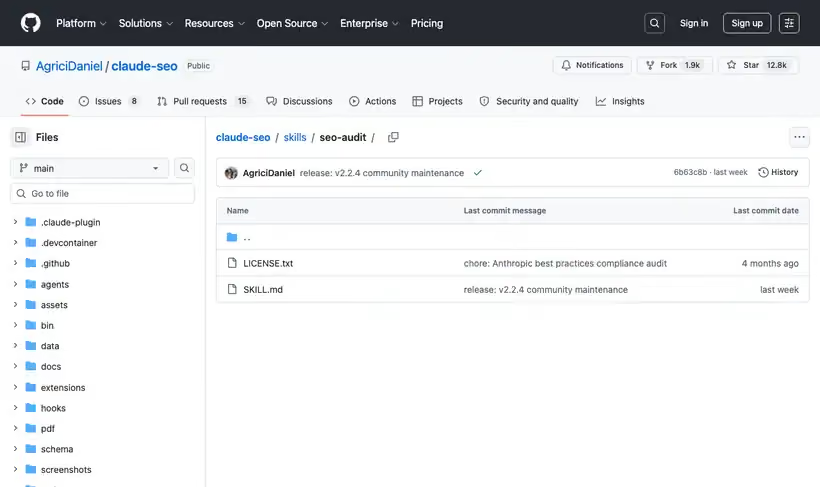
What it is.
Claude SEO is a Claude Code plugin holding 25 sub-skills and 18 specialist agents, and seo-audit is the entry point that drives them. It renders the homepage first, works out what kind of business the site is, then follows internal links up to 500 pages while respecting robots.txt.
Then it delegates. Eight agents always run, across technical checks, content quality, schema, sitemaps, performance, visual rendering, AI-search readiness and search experience. Seven more spawn only when the site earns them, so a local service business picks up Google Business Profile and geo-grid checks that a SaaS site skips.
Everything is written under a {domain}-audit folder, and the drift agent compares against a stored baseline once one exists. So the second audit tells you more than the first.
What you get.
- A health score from 0 to 100, aggregated across every agent that ran
- A prioritized action plan where each item names the check that produced it
- Audit files under {domain}-audit, so the next run has something to compare against
- An optional PDF or HTML report for a client review
- Drift comparison against a stored baseline once you have run it twice
How to set it up.
Add the marketplace once with /plugin marketplace add AgriciDaniel/claude-seo, then /plugin install claude-seo@agricidaniel-claude-seo.
Run /seo setup. It builds an isolated Python environment inside Claude's plugin data and installs Playwright Chromium, so your global packages stay untouched.
Check the install with /seo doctor before you point it at a client site.
Call the audit with a URL. The homepage gets rendered first, so a JavaScript-heavy site still gets read properly.
Leave the crawl at 500 pages for a first pass on a large site, and pull it down when you only care about the money pages.
Add Google credentials if you want field data. seo-google only spawns when google_auth.py --check finds them, and it brings in Core Web Vitals from CrUX plus indexation from Search Console.
Pricing Plans
Free. MIT license.
Optional DataForSEO, Moz, Bing and Google keys are billed by those providers. Checked against the repo in July 2026.
Use cases
Scoping before the proposal
A prospect's unfamiliar site lands in your inbox. Point the audit at the URL; you get the business-type read and a scored action plan inside one session, which is enough to price the engagement.
Watching drift week to week
You've audited once and don't want to re-read the same findings. Run it again on the same domain; the drift agent compares against the stored baseline and reports what moved.
A report for the room
The findings need to survive a leadership audience. Ask for the PDF or HTML report; the health score and the plan arrive presentation-shaped, with each item naming the check that produced it.
Adding Google field data
Lab numbers aren't convincing anyone. Add Google credentials before the run; the Google agent spawns and brings Core Web Vitals from CrUX plus indexation from Search Console into the same plan.
Best for
A first pass on an unfamiliar site
You get a business-type read, a crawl, and a scored action plan inside one session, which is enough to scope an engagement before writing a proposal.
Weekly checks on a site you own
The drift agent compares each run against the last stored baseline, so you see what moved instead of re-reading the same findings.
A second opinion before a leadership review
Schema deprecation and AI-citability gaps are the two things Search Console and Lighthouse stay quiet about, and both get their own agent here.