


Preview
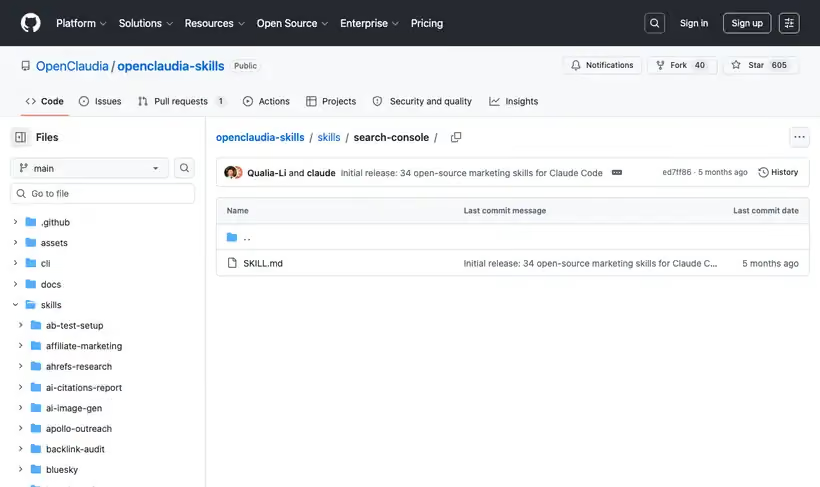
What it is.
It queries the Search Console API for clicks, impressions, click-through rate, position, index coverage, URL inspection and Core Web Vitals, off one read-only OAuth setup.
You get answers with no interface row caps and no export step, which is what makes monthly reporting repeatable. Credentials sit in a dotenv file that the other Google skills in the library share, so one setup covers all of them.
What you get.
- Clicks, impressions, click-through rate and position by query or page
- Index coverage, so you can see what Google chose not to index
- URL inspection on individual pages
- Core Web Vitals field data
- Sitemap status, read straight from the API
How to set it up.
Install with npx openclaudia install search-console.
Create an OAuth client and set GOOGLE_CLIENT_ID and GOOGLE_CLIENT_SECRET.
Use the read-only webmasters scope. It is all the skill needs and it limits what a leaked token can do.
Store credentials in ~/.claude/.env.global if you plan to add the other Google skills, since they read the same file.
Ask questions with a date range and a breakdown named, because an unbounded query returns more than you can read.
Check index coverage before diagnosing a traffic drop. A page Google dropped from the index is a different problem from a ranking change.
Pricing Plans
Free. MIT license.
The Search Console API is free to query. Checked against the skill file in July 2026.
Use cases
Explaining a traffic drop today
Organic fell and someone wants the reason by the afternoon. Ask with a date range and it checks index coverage before rankings, since a page Google stopped indexing needs different work from one that slipped in position.
The monthly SEO report
Reporting currently means the same export and pivot every month. Ask the same question with the same breakdown and the answer comes back in the same shape, with no interface row cap.
Vitals on the money pages
You suspect slow templates are costing rankings. Name the pages and pull Core Web Vitals field data for them, off the same read-only connection.
Inspecting the pages that moved
A handful of URLs changed position sharply. Run URL inspection on those specific pages instead of rereading the site-level report.
Best for
A traffic drop you need to explain today
Index coverage plus query-level data in one session, with no export and no interface row cap.
Recurring SEO reporting
The same question asked monthly returns the same shape, which is what makes a report repeatable.
Pairing with an audit
Claude SEO's audit spawns its Google agent only when credentials exist, and this is the setup that provides them.