


Preview
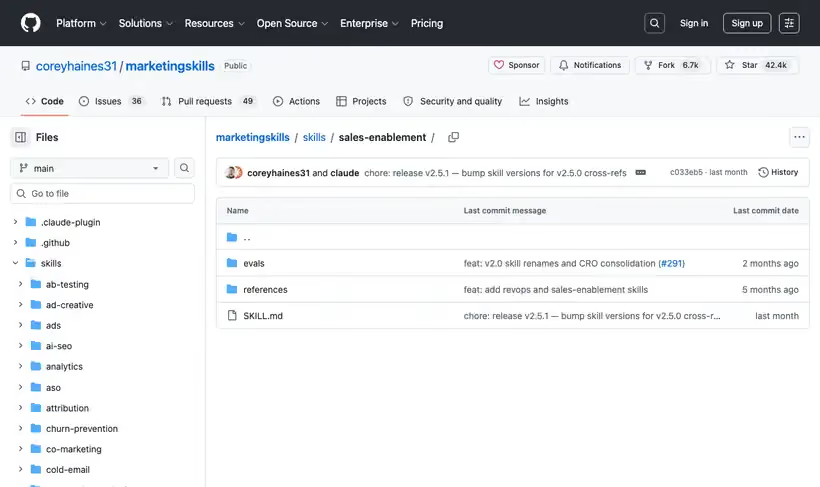
What it is.
You give it your differentiator against the next best alternative, how you sell, your deal size and cycle length, and every persona in the buying decision. It writes the collateral one asset at a time.
The output changes with those inputs, and it should: a one-pager for a small self-serve deal and a deal-specific ROI analysis for a six-month enterprise cycle are not the same document. Objection docs are only as good as the objections you bring from sales calls.
What you get.
- Pitch decks and one-pagers built on stated differentiators
- Objection handling documents tied to the objections you named
- Demo scripts and talk tracks
- Deal-specific ROI analysis for larger cycles
- Collateral keyed to funnel stage, one asset at a time
How to set it up.
Install with npx skills add coreyhaines31/marketingskills --skill sales-enablement -a claude-code.
Name what makes you different from the next best alternative, in one sentence. This is the input every asset is built from.
State how you sell: self-serve, inside sales, field sales or hybrid. It changes the format more than the content.
Give it the average deal size and cycle length, because a long cycle earns a ROI analysis and a short one does not.
List every persona in the buying decision. Collateral aimed at one persona in a three-person committee stalls.
Ask for one asset at a time, named by funnel stage. A full collateral set produced at once tends to repeat itself.
Pricing Plans
Free. MIT license.
Checked against the repo in July 2026.
Use cases
A first pitch deck
There's no deck and the demo carries every deal. State your differentiator against the next best alternative in one sentence, and the deck gets built from that line before any slide is designed.
An objection doc from calls
The same objections keep killing deals late. Bring the exact objections you hear on calls and the document comes back tied to each one, so reps answer what buyers say, never a generic FAQ.
ROI analysis for enterprise
A deal is months into the cycle and procurement wants numbers. Give it the deal size and cycle length, and it produces a deal-specific ROI analysis, the asset a long cycle earns.
Collateral for the committee
The one-pager lands with your champion and stalls with everyone else. List every persona in the buying decision and the assets come back aimed at the full room.
Best for
A first sales deck
The differentiator question forces the hard part before any slide gets designed.
Objections that keep killing deals
An objection document built from the objections you hear on calls beats a generic FAQ.
Multi-stakeholder enterprise deals
Naming every persona in the committee is part of the intake, which is where single-persona collateral fails.