


Preview
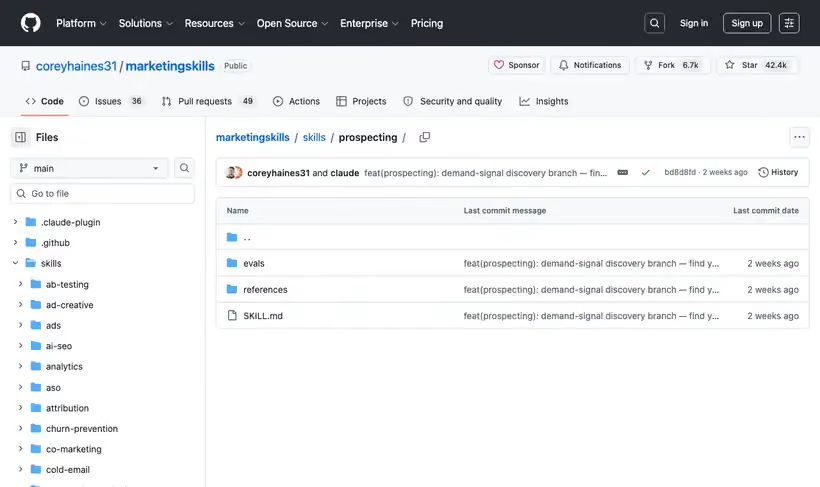
What it is.
It asks who you sell to and forks into one of four branches, each with its own definition of qualified and its own source list, then builds the filters for your list.
SaaS keys off tech stack and growth signals and local SMB off proximity and website status. The fourth branch is for finding your first customers, and it requires a cited public source per account, a forum post or a GitHub issue or a job post, instead of firmographic fit.
What you get.
- Four branches with a separate definition of qualified for each
- Source lists per branch, from Apollo and Clay through to Google Maps
- Signal-based qualification, including funding, hiring and vendor changes
- A demand-signal branch for pre-product-market-fit list building
- Branch-specific reference files for the deeper work
How to set it up.
Install with npx skills add coreyhaines31/marketingskills --skill prospecting -a claude-code.
Pick one branch at intake. Selling to two of these at once means picking the dominant branch and borrowing qualification signals from the other.
For the SaaS branch, name the tech stack match you need, since that plus growth signals is what qualified means there.
For general B2B, define the trigger events. Industry and size alone produce a list nobody replies to.
For local SMB, check website status and proximity, which is what separates an active business from a dead listing.
For a first-ten-customers push, take the demand-signal branch and require a cited public source per account: a forum post, a GitHub issue, a job post.
Pricing Plans
Free. MIT license.
Checked against the repo in July 2026.
Use cases
A stack-keyed SaaS list
You sell into companies running a particular tool. Take the SaaS branch, name the stack match you need, and qualified comes to mean stack plus growth signals, with the source list for that branch attached.
Design partners before fit
You need your first customers and firmographics won't find them. The demand-signal branch requires a cited public source per account, a forum post or a job listing, so every name on the list has shown the pain in public.
A live local list
Half the listings in your territory are dead businesses. The local SMB branch checks website status and proximity, which separates an operating business from a stale map pin.
Diagnosing a no-reply list
The list got built, the sequence ran, nobody answered. Compare your filters against the branch's definition of qualified and you'll usually find the list was shaped for a different way of selling.
Best for
A list that gets no replies
Usually a qualification problem. The branch definitions tell you what qualified should have meant for the way you sell.
Finding design partners
The demand-signal branch requires evidence of the pain in a public source, which is a different and better filter at pre-product-market-fit.
Selling to local businesses
The local SMB branch has its own sources and its own liveness checks, which the SaaS-shaped advice gets wrong.