


Preview
What it is.
You give it your current pricing, your conversion rate, your average revenue per user and your churn. It then separates packaging from the value metric from the price, and recommends each in that order.
The pricing page audit is worth running on its own, because it checks whether an AI agent can read your prices as text. Assistants shortlist software now, and a price behind a script is a price they cannot quote.
What you get.
- A packaging structure across tiers, settled before any price gets set
- A value metric recommendation, which is the choice that makes pricing feel fair
- A willingness-to-pay path including Van Westendorp
- Guidance on freemium versus free trial for your sales approach
- A pricing page audit read for human buyers and for AI agents
How to set it up.
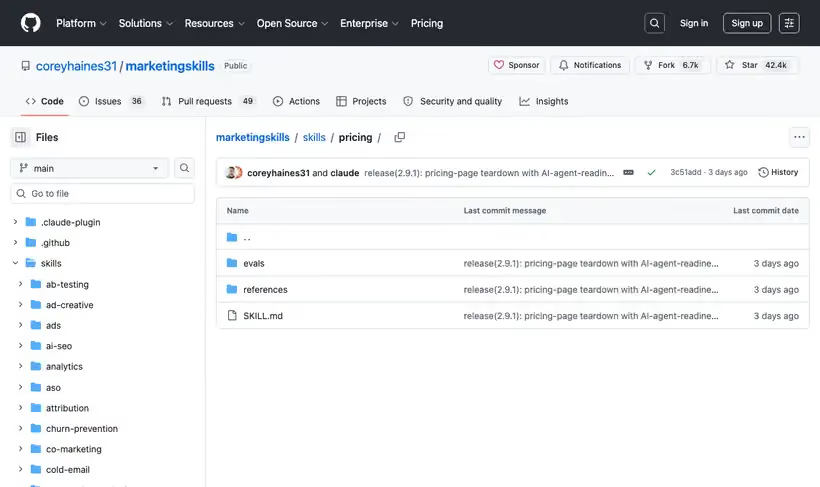
Install with npx skills add coreyhaines31/marketingskills --skill pricing -a claude-code.
Bring the four numbers: current conversion rate, average revenue per user, churn rate, and any pricing feedback from lost deals.
State your go-to-market approach. Self-serve, sales-led and hybrid pricing look different, and this answer shapes everything after it.
Settle the value metric before the price. Charging per seat caps your revenue where headcount stops; charging per contact or per workflow run grows with the customer.
Decide packaging next, then set numbers last. Reversing that order produces tiers that exist to justify a price.
Run the page audit with plain text pricing on the page itself, so both a buyer and an assistant can read it.
Pricing Plans
Free. MIT license.
Checked against the repo in July 2026.
Use cases
Escaping per-seat pricing
Revenue stops growing where the customer's headcount stops. Bring your conversion rate, revenue per user, churn, and lost-deal feedback; it recommends a value metric that grows with usage before any number changes.
Making prices agent-readable
Your prices render behind a script and the assistants shortlisting software can't quote them. Run the page audit; it reads the page as a buyer and as an agent, then names what has to become plain text.
Freemium versus trial
You're launching self-serve and can't settle how free should work. State your go-to-market approach along with the four numbers; the guidance comes back matched to how you sell instead of generic.
Repackaging before a raise
The tiers were built to justify prices and everyone can tell. Give it current pricing plus feedback from lost deals; packaging comes back settled first, with the numbers set last.
Best for
Pricing that feels wrong but you cannot say why
It is usually the value metric and not the number, and this is the skill that separates the two.
A price increase you have to justify
Packaging and value metric work gives you something to change besides the number itself.
Getting quoted by AI assistants
The page audit checks whether prices are readable as text, which is what an assistant needs to name your tier.