


Preview
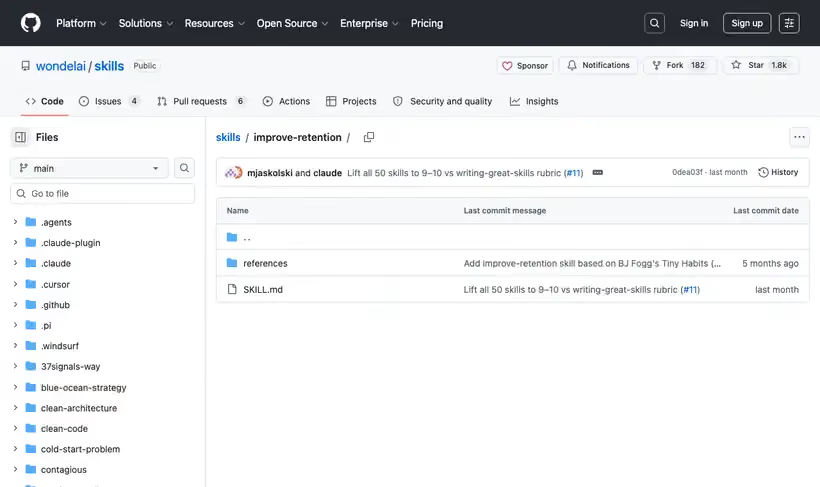
What it is.
You bring usage data from the point where people stop, and it tests the failed behavior against BJ Fogg's three terms: was there motivation, was it easy enough, and did anything prompt them.
That hands you three levers with an order. Ability is cheapest, so removing a step beats persuading anyone, and a capable motivated user who was never asked is the most common quiet failure.
What you get.
- A diagnosis across motivation, ability and prompt instead of one retention score
- The action line, so you can see which users were close and which were not
- Design changes aimed at the weakest of the three terms
- Activation friction identified as an ability problem
- A scored read with the specific changes to reach the top band
How to set it up.
Install with npx skills add wondelai/skills/improve-retention --global, or take the ux-design plugin.
Bring usage data for the drop-off point, not a churn rate. The model works on a specific behavior that failed to happen.
Test the three terms separately. Ask whether they wanted to, whether they could, and whether anything asked them to.
Start with ability, because it is usually cheapest to change. Removing a step beats persuading someone.
Add the prompt where it is missing. A capable and motivated user who was never asked is the most common quiet failure.
Leave motivation last. It is the hardest term to move and the one most retention programs start with.
Pricing Plans
Free. MIT license.
Checked against the repo in July 2026.
Use cases
Diagnosing week-one disappearances
Users sign up and go quiet within days. Bring usage data from the point where they stop and it tests the failed behavior against the model's terms, telling you whether the product was too hard or nothing ever prompted a return.
Abandoned checklist teardown
The onboarding checklist gets left half done. Hand over where people stall and it reads the stall as an ability problem first, returning the steps to remove before anyone rewrites the copy.
Placing a missing prompt
Capable, motivated users drift away between sessions. It finds the moments where nothing asks the user to come back, so the notification you add answers a named gap in the behavior model.
Scoring the retention plan
You have a retention program and no way to grade it. Run the plan through and it comes back scored, with the specific changes that would move it into the top band.
Best for
Users who sign up and vanish
The three-term split tells you whether it was friction, absence of a prompt, or genuine lack of interest.
An onboarding checklist that gets abandoned
Ability problems show up here, and removing a step is cheaper than any copy change.
Deciding what notification to add
The prompt term makes this a diagnosis instead of a guess about frequency.