


Preview
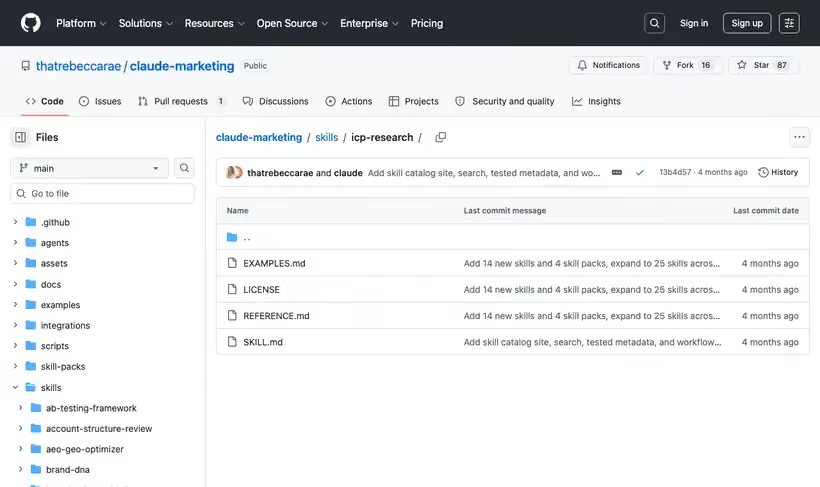
What it is.
You give it your product, your pricing and whoever buys today. It returns a profile with pain points, objections and buying triggers, then finds the forums and groups your buyers post in and pulls their own wording out of those threads.
What you walk away with is a language file. The copywriting and cold-email skills both ask for voice-of-customer material and write generically without it, so this is the step that makes the rest of a stack work.
What you get.
- A detailed profile covering pain points, objections and buying triggers
- Messaging angles tied to each pain point
- A list of the communities your buyers post in
- Verbatim customer language pulled from those communities
- Buyer personas built on the research instead of on assumption
How to set it up.
Clone the repo and copy the skill folder into ~/.claude/skills. The install command is in the skill file itself.
Answer the product context questions first: what you sell, the differentiators, the pricing model and who buys today.
Name the industry and the market before the research step, because community discovery keys off both.
Let it find the communities, then read a sample of threads yourself. This is the step where you learn your buyers use a different word for your category.
Keep the extracted language verbatim. Paraphrasing it back into your own vocabulary undoes the exercise.
Feed the language file into copywriting or cold-email, both of which ask for voice-of-customer material and improve with it.
Pricing Plans
Free. MIT license.
Checked against the repo in July 2026.
Use cases
Feeding the cold-email skill
You're about to write a cold sequence and the voice-of-customer field is blank. Hand it your product and whoever buys today; back comes a language file of verbatim buyer wording that the copywriting and cold-email skills read and improve with.
Scouting an unfamiliar segment
You're entering a market where you have no customers to interview yet. Name the industry and the market; it finds the forums your buyers post in and pulls a sample of threads, and you learn what word that segment uses for your category before writing anything.
Rebuilding assumption-based personas
The persona deck was written in a workshop and nobody trusts it. Give it your product, pricing, and current buyers; back come personas built on the community research, with pain points and objections evidenced by threads your buyers wrote.
Prepping a copy rewrite
The landing page sounds like it was written inside the company. Feed it your product context, then take the messaging angles tied to each pain point plus sentences you didn't write yourself.
Best for
Copy that sounds like your company
The community language step answers it, and it hands you sentences you did not write.
A new market you do not know yet
Community discovery is faster than a round of customer interviews when you have no customers in that segment yet.
Feeding the rest of a skill stack
Several skills ask for customer language up front. This is the one that produces it.