


Preview
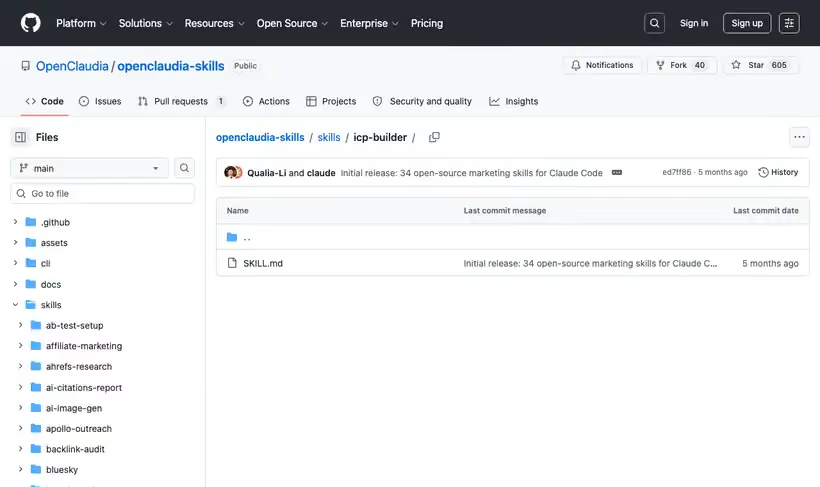
What it is.
You answer questions about how you sell, at what price and at what stage, and it fills a four-block profile: firmographics, technographics, situational triggers and qualifying criteria.
Triggers are the block that makes the output usable, because a funding round or a new VP is searchable and a growth ambition is not. Must-have criteria arrive separated from nice-to-have, which is what a list builder needs.
What you get.
- A filled B2B profile across firmographics, technographics, triggers and qualifying criteria
- Must-have criteria separated from nice-to-have, so filters can be applied
- Situational triggers written as events, which is what a signal-based list needs
- Buyer personas alongside the account profile
- A segmentation pass when you have more than one profile in play
How to set it up.
Install with npx openclaudia install icp-builder.
Bring your current customer list, even a short one. The framework grades better against accounts you already closed than against an idea of them.
State how you sell and the price point. Self-serve, sales-assisted and enterprise change what counts as a qualifying criterion.
Fill firmographics as ranges, not point values, so the profile survives a growing company.
Write technographics as the tools they already run and what they use today for this problem, because that is what a stack filter can match.
Put every trigger in event form. A funding round or a new VP is searchable, a general growth ambition is not.
Pricing Plans
Free. MIT license.
Checked against the skill file in July 2026.
Use cases
A profile from closed deals
You have a short customer list and a loose sense of who fits. Answer its questions with the accounts you already closed and it fills the four-block profile, graded against customers, never against an idea of them.
Narrowing an everyone ICP
The current profile describes any company with a budget. The qualifying-criteria block forces a threshold, and the must-have filters come out separated from the nice-to-haves.
Briefing the list builder
An enrichment tool needs filters it can apply. Hand over the must-have criteria plus triggers written as events, a funding round or a new VP, and the list build starts without interpretation.
Comparing two early segments
After the first customers you suspect two profiles are in play. The structured blocks make them comparable, so you can see which segment converts and which one only signs up.
Best for
Briefing a list build
Must-have filters and event-shaped triggers are exactly the two inputs an enrichment tool needs to produce a usable list.
Cutting an ICP that says everyone
The qualifying criteria block forces a threshold, which is where a vague profile finally narrows.
Segmenting after your first ten customers
Structured blocks make two profiles comparable, so you can see which one converts and which one just signed up.