


Preview
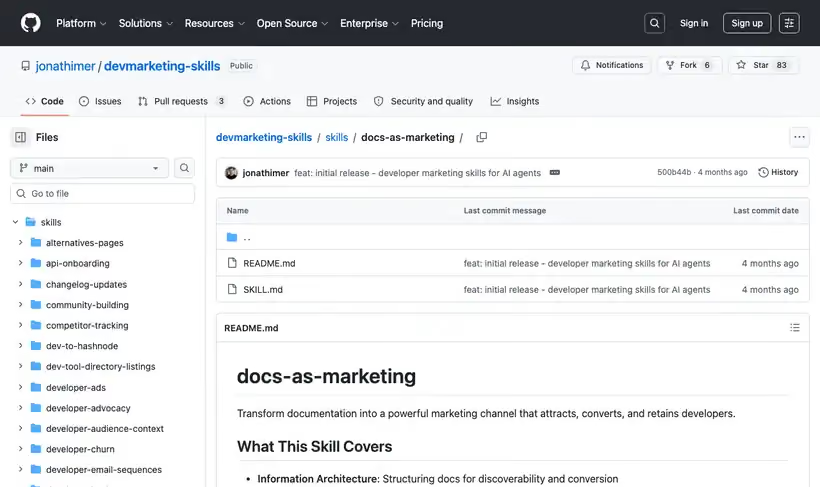
What it is.
It audits your documentation against four jobs and tells you which one is missing: ranking for technical queries, cutting time to value, holding retention, and being worth sharing.
The output is a docs plan with a target per page, so a quickstart gets measured on time to a first working call and reference pages on search entries. Most doc sets turn out to be all reference and no quickstart, which shows up as a slow activation curve.
What you get.
- A job assigned to each doc type across the funnel
- Quickstart structure aimed at time to value
- Search-oriented guidance so docs pages rank on technical queries
- Conversion paths inside documentation, without turning docs into a pitch
- A read on which docs to write first
How to set it up.
Install with npx add-skill jonathimer/devmarketing-skills.
Run developer-audience-context first, so the docs plan knows the technical level and the frameworks in play.
Audit what you have against the four jobs. Most doc sets are all reference and no quickstart, which shows up as a slow activation curve.
Rewrite the quickstart to a first working result, and cut anything between the developer and that result.
Write for the queries developers type, including error messages, which is where developer-seo pairs with this.
Add conversion paths where a developer has just succeeded at something, because that is the only place a prompt reads as helpful.
Pricing Plans
Free. MIT license.
Checked against the repo in July 2026.
Use cases
Explaining slow activation
Signups arrive and never make a first call. Hand it your doc set; the four-job audit usually comes back all reference and no quickstart, with the rewrite plan attached.
Rewriting the quickstart
The quickstart wanders before the first working result. Give it the current page; back comes a version cut to the shortest path to a working call, measured on time to value.
Arguing for docs ownership
Docs sit unowned between engineering and marketing. Run the audit; each doc type comes back with a marketing job and a measure attached, which is the argument for putting resource behind them.
Placing conversion prompts
Sales wants calls to action in the docs and engineering is bracing. Run the plan; conversion paths land only where a developer has just succeeded at something, so the docs stay docs.
Best for
A developer product with slow activation
The quickstart is usually the cause, and this treats it as an activation asset with a measurable target.
Docs that nobody owns
Assigning each doc type a marketing job gives you the argument for putting proper resource behind them.
Ranking on technical queries
Docs pages compete well for error messages and how-to queries, which is traffic a blog rarely wins.