


Preview
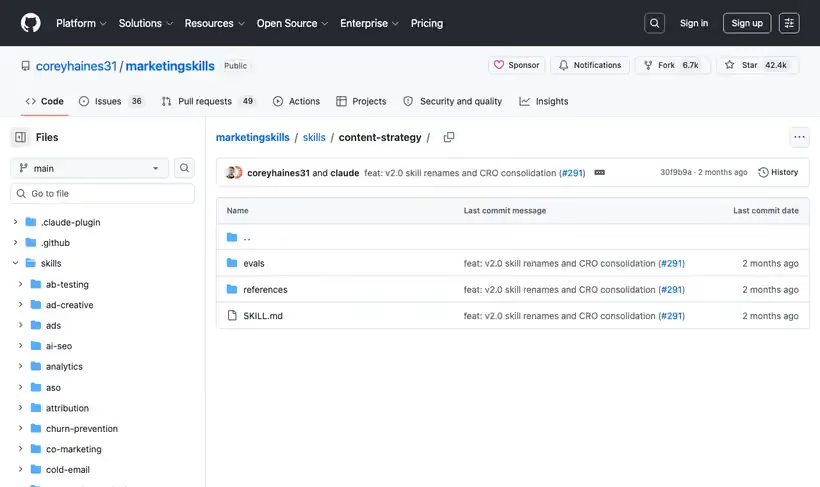
What it is.
You answer questions about your buyers and your product, and it returns pillars, topic clusters and a keyword map across four buyer stages, with every piece tagged searchable or shareable.
Those two tags change the brief and the success measure, so your calendar stops mixing pieces chasing search demand with pieces chasing attention. Candidate topics come from your sales calls and support tickets as well as a keyword tool.
What you get.
- A pillar and cluster structure with criteria for what qualifies as a pillar
- Keywords mapped across four buyer stages
- Separate guidance for searchable and shareable pieces
- Content ideation sources beyond keyword tools, including sales calls and support tickets
- A roadmap you can hand to a writer or a freelancer
How to set it up.
Install with npx skills add coreyhaines31/marketingskills --skill content-strategy -a claude-code.
Run product-marketing first so the plan starts from your positioning instead of a blank page.
Answer the customer research questions with material you already have: the questions buyers ask, the objections from sales calls, the topics that repeat in support tickets.
Decide the primary goal before topics. Traffic, leads and thought leadership produce different plans from the same product.
Test each candidate pillar against the stated criteria. A pillar that fails them is a single post pretending to be a cluster.
Tag every piece with its buyer stage. A calendar that is all awareness is the most common failure this catches.
Pricing Plans
Free. MIT license.
Checked against the repo in July 2026.
Use cases
Ending the topic debate
Every Monday someone asks what to write. Answer the buyer questions with material from sales calls and support tickets; back comes a pillar-and-cluster plan with a buyer stage tagged on every piece.
Pruning the ideas backlog
The topic list holds months of candidates and no filter. Run each one against the pillar criteria; the list shrinks, and what survives has a stated reason to exist.
Briefing an outside writer
A freelancer who doesn't know your market starts next week. Hand over the roadmap; buyer stage plus cluster placement tells them what each piece is for before they research it.
Splitting search from attention
The calendar mixes pieces chasing search demand with pieces chasing shares. The searchable and shareable tags give each kind its own brief and its own success measure, so the mix becomes deliberate.
Best for
A blog with no plan behind it
You get pillars, clusters and a buyer stage per piece, which is enough to stop the weekly what-should-we-write conversation.
Deciding what not to write
The pillar criteria are a filter, and most topic lists shrink by half when you apply them.
Briefing writers who do not know your market
Buyer stage plus cluster placement tells a freelancer what the piece is for before they research it.