


Preview
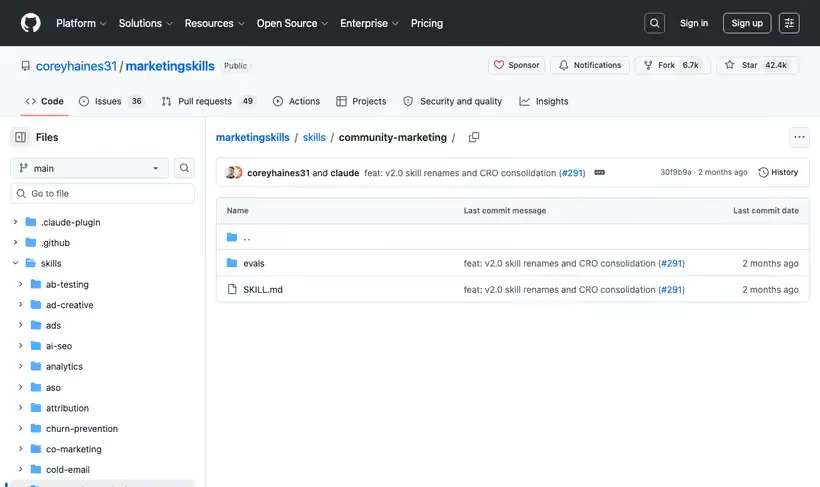
What it is.
You name your platform, your member count and one primary goal, and it returns a community plan sized to that stage: what to program, who to recruit and what to measure.
Tactics are banded by member count, so work under 100 members is conversation seeding and past 1k it becomes moderation and programming. The design rule it enforces is building around who members want to be, since a group organized around your product runs out of things to say.
What you get.
- A shared-identity framing for the community, separate from your product
- Platform guidance across Discord, Slack, Circle, Reddit and forums
- Stage-appropriate tactics, from pre-launch through established
- A primary goal named, whether that is retention, support deflection or product feedback
- An ideal member profile, including what they hope to get from joining
How to set it up.
Install with npx skills add coreyhaines31/marketingskills --skill community-marketing -a claude-code.
Name the stage honestly. Under 100 members the work is conversation seeding, and past 1k it becomes moderation and programming.
Pick one primary goal. Retention, activation, word of mouth, support deflection, product feedback and revenue pull in different directions.
Write the shared identity before the channel list. Members should be able to say who they are in the group without mentioning your product.
Choose the platform from where your members already are. A Discord for an audience living in Slack starts at zero.
Define the ideal member including their motivation, because that is what the welcome flow has to speak to.
Pricing Plans
Free. MIT license.
Checked against the repo in July 2026.
Use cases
Reviving a quiet Slack
The community went silent once the launch buzz faded. Give it the platform and the member count; back comes the shared-identity framing and programming sized to your stage, since a group organized around your product runs out of things to say.
The should-we-start question
Someone upstairs wants a Discord. Answer the stage and goal questions before opening anything; the plan surfaces the staffing cost, which is what settles the debate.
Picking the platform
Your members live in Slack and the team is drawn to Discord. Describe who the members are and what they hope to get from joining; the platform call comes back made from where they already spend time.
Standing up support deflection
Support volume is the argument for a community. Name deflection as the one primary goal; the plan comes back with the staffing expectation set and a welcome flow that speaks to member motivation.
Best for
A Slack or Discord that went quiet
The identity question is usually the cause. A group built only around your product runs out of things to say.
Deciding whether to start one at all
The stage and goal questions surface the staffing cost before you open a server.
Turning customers into advocates
Advocacy is one of the named goals, and the tactics differ from a support community.