


Preview
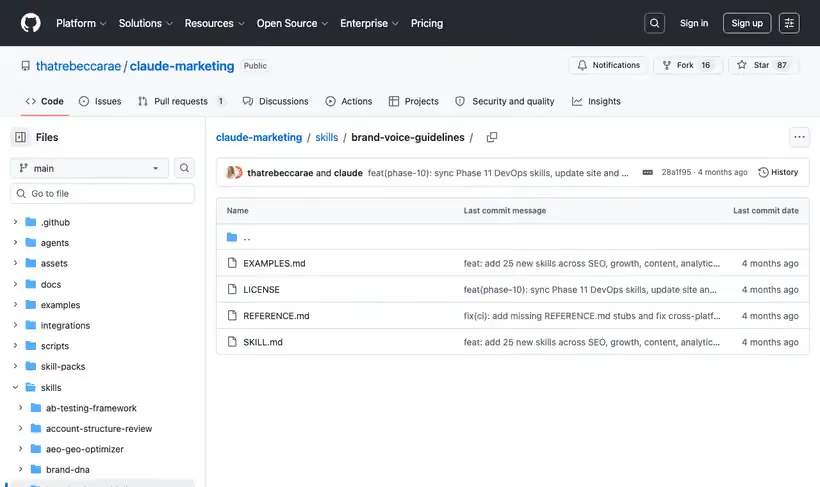
What it is.
It audits 10 to 20 pieces of your existing content, names the adjectives that describe the writing, and turns those into a voice definition plus a tone matrix.
You end with a document your team recognizes, because it comes from what you already publish instead of a workshop. The matrix covers how the voice moves between a celebration and an incident notice, which is where single-voice guides fall over.
What you get.
- A voice definition derived from 10 to 20 existing pieces
- A tone matrix covering how the voice moves by situation
- A messaging framework built on top of the voice
- Brand book documentation you can hand to a freelancer
- A consistency check you can run against new drafts
How to set it up.
Clone the repo and copy skills/brand-voice-guidelines into ~/.claude/skills.
Collect 10 to 20 pieces across channels, including the ones you think are off-brand. The contrast is what makes the audit useful.
Let it name the adjectives first, before you write any voice statement. Describing what you already sound like beats deciding what you want to sound like.
Keep the voice constant and put every situational variation in the tone matrix. Mixing them is what produces a voice document nobody can apply.
Fill the tone matrix for the situations you face, including the awkward ones like an incident notice.
Store the finished voice where your other skills read it, so the copy skills apply it without a re-brief.
Pricing Plans
Free. MIT license.
Checked against the repo in July 2026.
Use cases
Replacing a shelved voice doc
The old voice guide came out of a workshop and nobody opens it. Collect a stack of published pieces, including the off-brand ones, and the audit names the adjectives you already write in and turns them into a definition the team recognizes.
Tone for hard announcements
The blog voice falls apart the day you have to post an incident notice. Fill the tone matrix for the situations you face and you get the same voice mapped from a product celebration to an apology.
Checking a freelancer's draft
A new writer's first draft sounds close but off. Run the consistency check against the finished voice document and it flags where the draft departs from the derived definition.
Feeding the skill stack
Your copy and email skills all ask for brand voice. Store the finished document where they read it and each one applies the voice without a re-brief.
Best for
A voice document nobody uses
Usually because it was invented instead of derived. An audit of your own writing produces something the team recognizes.
Onboarding freelance writers
Voice plus a tone matrix answers most of the questions a new writer asks in their first week.
Feeding a skill stack
The copy and email skills all ask for brand voice. This produces the document they read.